
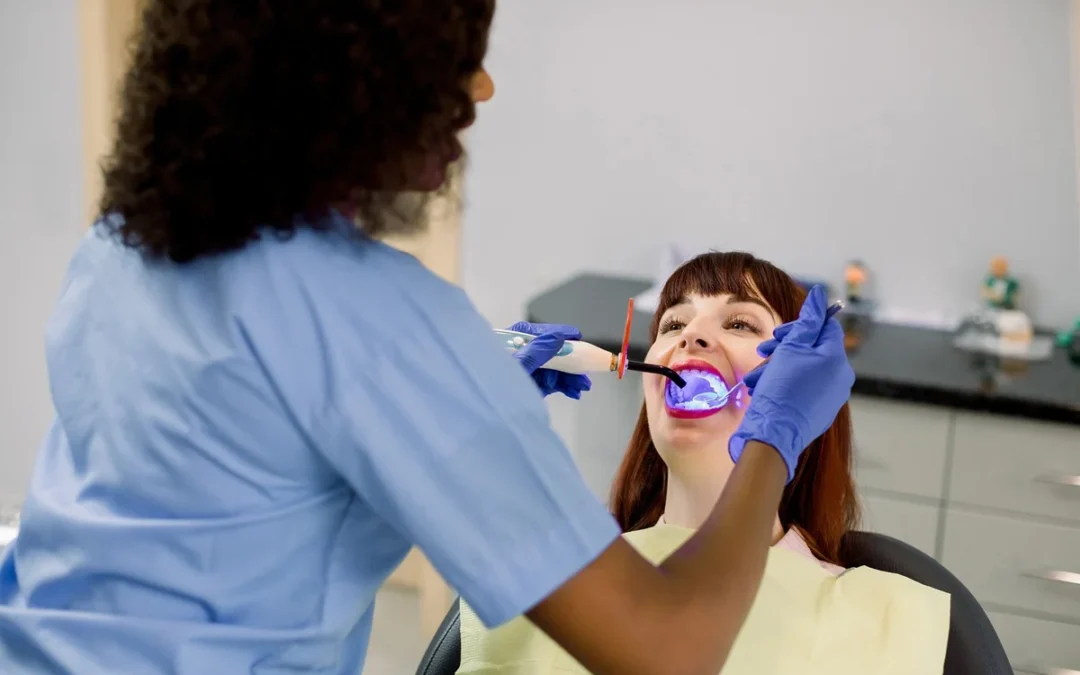
Sensitive teeth and teeth whitening don’t always mix well. If you’ve ever winced from an icy drink or hot coffee, you know how uncomfortable sensitivity can be. Adding a whitening treatment on top of that sounds like a recipe for pain. But it doesn’t have to be.
At North Scottsdale Dentistry in Scottsdale, AZ, we help patients with sensitive teeth whiten safely and comfortably every day. Here’s what you need to know.
Why Does Whitening Cause Sensitivity?
Whitening products open tiny pores in your enamel called dentinal tubules to reach the stains underneath. This temporarily exposes the nerves inside your teeth to temperature changes and air. The result: a sharp, short-term zing or ache.
People who already have sensitive teeth feel this more intensely because their tubules may be more exposed to begin with, due to thin enamel, gum recession, or enamel erosion.
What Works for Sensitive Teeth
1. Lower-Concentration Whitening Products
Higher peroxide means more effective whitening, but also more sensitivity. For people who are prone to sensitivity, starting at a lower concentration — such as 6% hydrogen peroxide — and working up slowly is the smarter approach.
2. Potassium Nitrate-Based Toothpaste
Using a sensitivity toothpaste with potassium nitrate for two weeks before and after teeth whitening treatment helps block the nerve signals. It makes a real difference for most patients.
3. Shorter Application Times
Instead of leaving strips or trays on for the full recommended time, try shorter sessions spread over more days. You get the same results with less irritation.
4. Custom Trays from Your Dentist
Generic whitening trays don’t fit precisely, which can let gel leak onto your gums and cause irritation. Custom trays made at North Scottsdale Dentistry fit your teeth exactly, reducing contact with soft tissue and lowering sensitivity risk.
What to Avoid If You Have Sensitive Teeth
- High-concentration whitening strips used daily
- Charcoal-based products, which can be abrasive
- Whitening right after a cleaning or dental procedure
- Eating hot or cold foods within 24 hours of whitening
- Skipping a sensitivity toothpaste pre-treatment
Professional Whitening for Sensitive Teeth: Is It Safe?
Yes — and it’s actually safer than using generic products at home. Your dentist can adjust the peroxide concentration, apply fluoride gel to reduce sensitivity after treatment, and protect your gums during the process.
At North Scottsdale Dentistry, we also offer desensitizing gel as part of our whitening protocol. Most patients with sensitive teeth do fine with proper preparation.
End Note
Sensitive teeth are not a reason to skip whitening. They’re just a reason to be smarter about it. The right products, proper preparation, and professional guidance make all the difference. If you’ve been holding off because of sensitivity, schedule a consultation at North Scottsdale Dentistry. You can also contact a local dental office to ask about sensitivity-friendly whitening options available in your area.
Frequently Asked Questions
Q 1. Is it normal for teeth to hurt after whitening?
Short-term sensitivity is common and usually fades within 24 to 48 hours. If pain lasts longer, see your dentist.
Q 2. Which whitening products are best for sensitive teeth?
Look for products with potassium nitrate or fluoride, or ask your dentist for a prescription-strength sensitivity formula.
Q 3. Can I still whiten teeth if I have gum recession?
Yes, but with extra care. Exposed root surfaces are more sensitive and don’t whiten the same as enamel.
Q 4. How long should I wait between whitening sessions if I’m sensitive?
At least two to three months between professional treatments. Give your teeth time to rehydrate and recover.
Q 5. Does fluoride help with whitening sensitivity?
Yes. Fluoride treatments before and after whitening can reduce sensitivity significantly.
Q 6. Can I use whitening strips if I have sensitive teeth?
Use low-concentration strips and reduce application time. Stop if the pain is severe and consult your dentist.
Q 7. Is sensitivity after whitening a sign of damage?
Usually not. It’s a normal reaction. However, if the sensitivity is severe or long-lasting, a dental exam is recommended.