
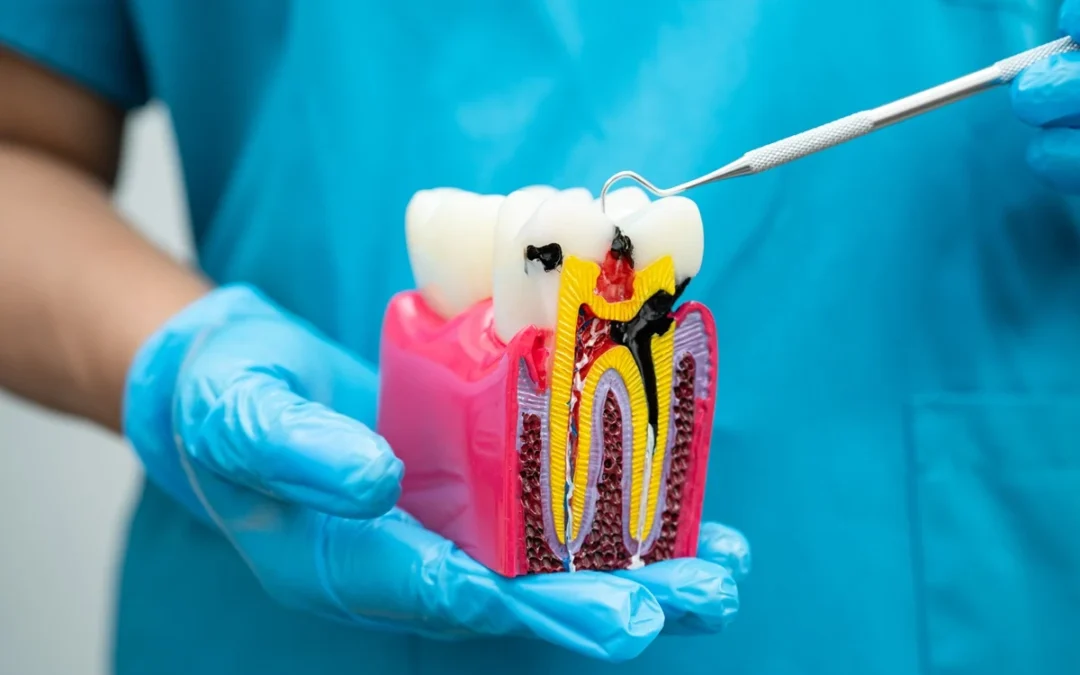
A common question patients ask after a root canal is simple: How long will this tooth last? The encouraging answer is that a properly treated tooth can often last many years—sometimes decades, and in some cases a lifetime.
At North Scottsdale Dentistry in Scottsdale, AZ, Dr. Laura Sibrava and Dr. JoAnne Curry frequently help patients save teeth that would otherwise be lost to infection or deep decay. Understanding what affects the lifespan of a root canal-treated tooth can help you protect your investment in your oral health.
What a Root Canal Actually Does
A root canal does not weaken a tooth on its own. The procedure removes infected or damaged tissue from inside the tooth, cleans the canals, and seals the space to prevent reinfection.
What the treatment accomplishes
- Removes infection
Eliminates bacteria and inflamed tissue from the root canals. - Relieves pain
Reduces pressure and inflammation that cause toothache. - Preserves the tooth
Allows the natural tooth structure to remain in place rather than extracting it.
In many cases, the tooth is then restored with a crown or other restoration to protect it from fracture. The goal is to keep the natural tooth functioning comfortably and effectively.
The Short Answer: Many Years, Often Decades
Research and clinical experience show that root canal-treated teeth can remain healthy for a very long time when they are properly restored and maintained. Some studies report success rates exceeding 85–95% over many years.
Think of a root canal-treated tooth like a repaired house. If the foundation is sound, the repair is done correctly, and the structure is maintained, it can continue serving its purpose for a very long time.
A root canal is often a tooth-saving procedure, not a temporary fix.
With proper restoration and regular dental care, many root canal-treated teeth continue functioning for decades. The treatment removes infection and helps preserve your natural tooth.
What Determines How Long the Tooth Lasts?
Several factors influence longevity. Understanding them can help you make decisions that support long-term success.
The biggest factors
How much tooth structure remains
A tooth that still has substantial healthy structure tends to have a better long-term outlook than one that was extensively damaged by decay, trauma, or a large fracture before treatment.
Whether a crown is placed
Many back teeth that receive root canal treatment benefit from a crown. After treatment, the tooth can become more brittle because it has already lost significant structure. A crown acts like a protective helmet, helping distribute biting forces and reducing the risk of fracture. For front teeth, a crown may not always be necessary, but your dentist in Scottsdale will evaluate the specific situation.
Quality of the root canal treatment
Thorough cleaning, shaping, and sealing of the root canals are essential. When bacteria are effectively removed and the canals are properly sealed, the risk of reinfection is much lower.
Oral hygiene habits
A root canal-treated tooth can still develop decay around the filling or crown. Brushing, flossing, and regular professional cleanings remain important.
Bite forces and grinding
Patients who clench or grind their teeth place additional stress on restorations and tooth structure. In some cases, a night guard is recommended to help protect the teeth.
Signs That a Root Canal-Treated Tooth Is Doing Well
Most successful root canal-treated teeth become unremarkable—in the best possible way. You chew, speak, and smile without thinking about them.
Common signs of success
- No pain during chewing.
- No lingering sensitivity.
- Healthy-looking gums around the tooth.
- No swelling or drainage.
- Stable appearance on dental X-rays.
At routine visits, your dentist can monitor the tooth and surrounding bone to confirm that healing remains stable over time.
When Problems Can Occur
Even though root canal treatment has a high success rate, problems can occasionally develop years later.
Possible complications
- New decay develops around the restoration.
- The tooth fractures.
- A previously hidden canal becomes infected.
- The seal of the restoration breaks down.
- Trauma damages the tooth.
If symptoms such as pain, swelling, or sensitivity return, prompt evaluation is important. Early treatment often improves the chances of saving the tooth again.
Can a Root Canal-Treated Tooth Last a Lifetime?
Yes, it can. Many patients keep their root canal-treated teeth for the rest of their lives. However, no dental treatment comes with an absolute lifetime guarantee. The long-term outcome depends on the condition of the tooth, the quality of the restoration, and ongoing care.
A useful way to think about it: the root canal addresses the infection inside the tooth, while the restoration (such as a crown) protects the tooth during everyday use. Both pieces are important for long-term success.
Important!
A root canal can last a lifetime, but the restoration protecting the tooth matters too.
The root canal removes infection inside the tooth, while the crown or filling protects the tooth from everyday forces. Long-term success depends on both the treatment and the restoration.
How to Maximize the Lifespan of Your Treated Tooth
If you have had a root canal, these habits can make a meaningful difference.
Best practices for longevity
Complete the recommended restoration
If your dentist recommends a crown, do not delay it unnecessarily. Protecting the tooth early can reduce the risk of fracture.
Brush twice daily and floss regularly
The tooth may have had a root canal, but it can still be affected by new decay if plaque accumulates around the restoration.
Attend regular dental checkups
Routine examinations and X-rays help identify small issues before they become major problems.
Address teeth grinding
If you grind your teeth at night, a custom night guard may help protect both natural teeth and restorations.
Avoid using teeth as tools
Opening packages, biting ice, or chewing very hard objects can increase the risk of fractures.
What If the Tooth Cannot Be Saved?
In some situations, a tooth may become too damaged from fracture, recurrent infection, or severe decay. If that happens, your dentist can discuss replacement options such as a dental implant, bridge, or partial denture.
However, the primary goal of root canal therapy is to avoid extraction whenever possible. Preserving your natural tooth generally provides the most efficient and comfortable chewing function.
Why Regular Follow-Up Matters
One of the most valuable things you can do is continue routine dental care even when the tooth feels fine.
At North Scottsdale Dentistry in Scottsdale, AZ, Dr. Laura Sibrava and Dr. JoAnne Curry monitor restored teeth as part of ongoing preventive care. Small changes are often easier and less expensive to address when caught early.
Many patients are surprised to learn that the tooth that once caused significant pain can become a stable, functional part of their smile for many years after successful treatment.
The Bottom Line
A root canal-treated tooth is not necessarily a temporary solution. When the treatment is performed properly, the tooth is restored appropriately, and you maintain good oral health habits, the tooth can often last decades—and sometimes a lifetime.
If you have questions about a previous root canal, need an evaluation of a treated tooth, or want to discuss treatment options, the team at North Scottsdale Dentistry is here to help. Dr. Laura Sibrava and Dr. JoAnne Curry can assess the health of the tooth and help you protect your smile for the long term.
Schedule an evaluation at North Scottsdale Dentistry in Scottsdale, AZ. Dr. Laura Sibrava and Dr. JoAnne Curry can assess the health of the tooth, review any symptoms or concerns, and help you protect your smile for the long term.
Frequently Asked Questions
How long does a root canal-treated tooth usually last?
Many root canal-treated teeth last for decades. Some remain healthy and functional for a lifetime when properly restored and maintained.
Is a crown necessary after a root canal?
Often, yes—especially for back teeth. A crown helps protect the tooth from fracture and distributes biting forces more evenly.
Can a root canal fail years later?
Yes, although it is relatively uncommon. Reinfection, new decay, fractures, or breakdown of the restoration can occur over time.
How can I help my treated tooth last longer?
Maintain excellent oral hygiene, attend regular dental checkups, avoid chewing very hard objects, and wear a night guard if you grind your teeth.